


On a former horse ranch off Old Montauk Highway, a 60-foot stick figure made of shipping containers sits in lotus position. In the late afternoon, the rust-orange steel catches the same light that hits the bluffs a mile east, and for a moment it almost looks like it belongs there. The Town of East Hampton is currently suing to have it removed. One local told the Post it looked like “a friggen junkyard mess.” Others have defended it on the grounds that it is, in fact, a commissioned artwork by a professional artist, sitting on private property.
Two things can be true. That tension — between what Montauk gets reduced to and what it actually is when you’re standing in it — is the whole story. People come out here expecting the East End algorithm of lobster rolls and coastal typography. What they find, if they look a little harder, is something stranger: a fishing town with a cold-water surf culture and a Warhol-era artist-colony DNA that was never fully washed away.
If we had just one day, here’s how we’d spend it.
9:00 — Wake Up
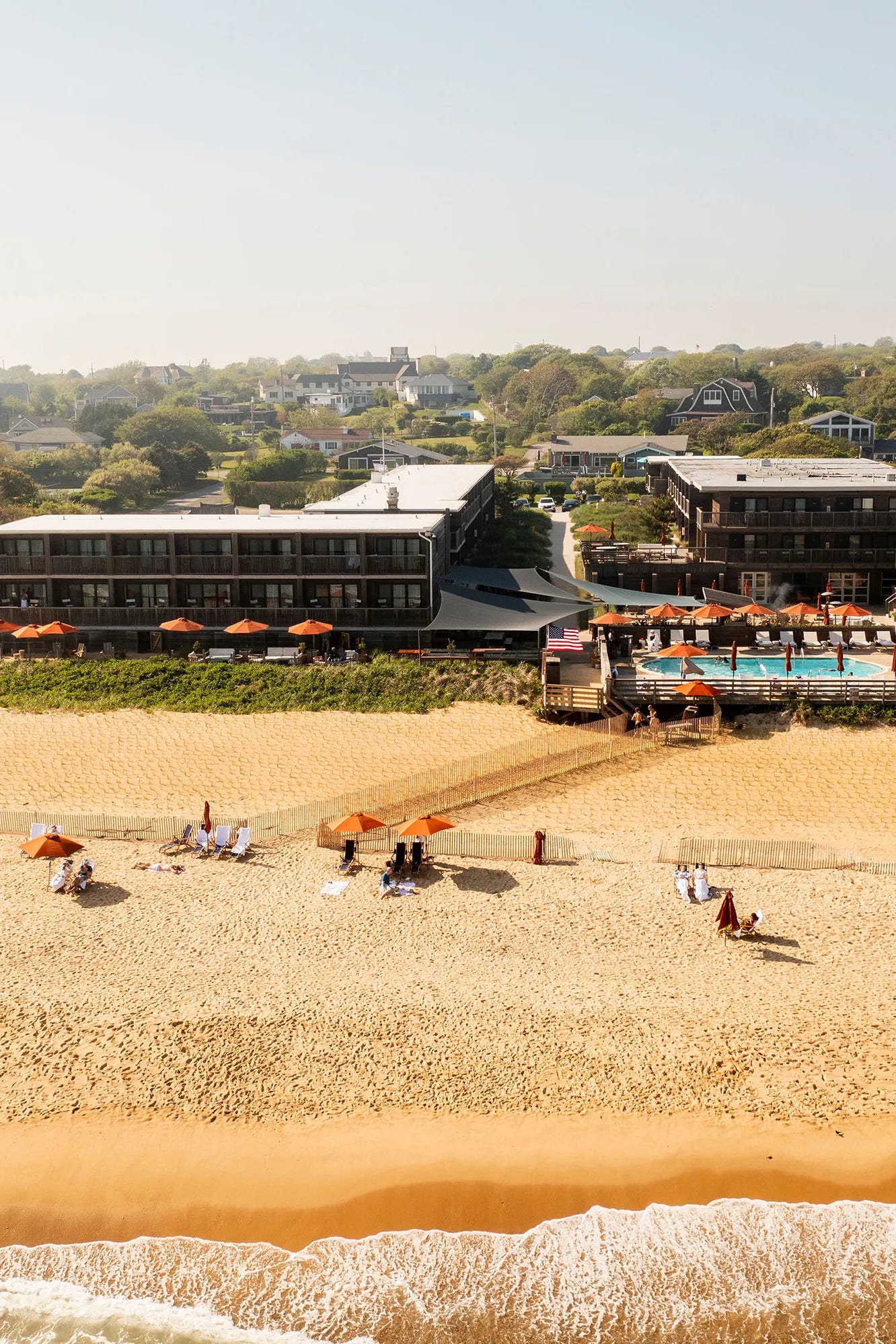
Begin at Marram. The property announces itself quietly: ninety-six rooms tucked into the dunes, a low-slung silhouette that reads more surf lodge than resort. The palette is sand and bleached wood. The lobby opens straight onto the Atlantic. When your backyard is the ocean, the best architecture just gets out of the way.
The morning move is Mostrador Marram, the outdoor Ottolenghi-style café that runs along the property’s edge during the summer months. Mostrador is the counter-service concept from Fernando Trocca and Martin Pittaluga, the team behind Parador La Huella in José Ignacio, Uruguay — one of the most celebrated beach restaurants in the world. Their Montauk outpost is run by Pittaluga’s son, Bambou, alongside chef Stefano Mastracci. The two of them also operate Mostrador Santa Teresita back in Uruguay. The menu changes daily, built from peak seasonal produce: savory meats, local seafood, vegetables from farms throughout Long Island.


The pastry program here is unparalleled. The Media Luna — a honey-glazed butter croissant that suggests the pastry chef really knows what they’re doing. The passionfruit muffin, if there are any left, is worth whatever time you had to wait. Order a cortado. Grab a copy of the Hamptons Chronicle, Rory Satran’s “mischievous local news for locals, weekenders, and wannabes,” and seat yourself with an ocean view.
If you need more coffee, you have options. Left Hand Coffee turns out a serious cup. And tucked behind Cynthia Rowley’s shop there’s a Tiny Outpost of Do Not Feed Alligators — David Shama’s West Village coffee bar with one of the most diverse specialty programs in New York. The name sounds like a joke. The coffee is not.
11:00 — Class at New York Pilates
Heather Andersen and Brion Isaacs run their company the way good restaurateurs run a dining room. It is as much a hospitality operation as it is a fitness brand. Brion is a DJ and musician, and the playlists bump with lesser-known disco-house gems. You’re greeted warmly at check-in, the instructors remember your name, and the whole experience is a joy. This is what it looks like when the people behind a business understand they’re in the service industry — and that no matter the product, hospitality is the most important ingredient.


After class, walk next door to Utilitaria Montauk Outpost. Say hello to the owner, Ingrid Solomonson. The store carries an edited selection of home goods, apothecary, handmade ceramics and objects that she sources thoughtfully from friends in the fashion business and local makers. There’s also an edit of her own vintage clothing for sale. The shop is supplied with books and an impressive collection of contemporary art by Johann Kugelberg, which includes originals from the likes of Andy Warhol and Jonas Mekas. Ingrid is as hospitable a shopkeeper as can be. She will tell you the full story behind any object in the shop, and her in-store playlists are unlike anything else you’ll hear in the area.
Noon — Beach Picnic
Get picnic supplies and head to the beach. For lunch, our best recommendation is Round Swamp Farm.
People love to talk about how expensive Round Swamp is, but it’s absolutely worth it. This is a gourmet grab-and-go grocer from a family that has been farming in the Hamptons for 300 years. The Montauk outpost — a short walk from the main beach in town — is a small theatre of abundance. You want the Fresh Lobster Salad, the Buttermilk Fried Chicken Breast, a Turkey Club with basil mayo and avocado, Kung Pao chips, Lisa’s Sea Salt Caramel Chocolate Chip Cookies, and some fresh plums or cherries from the farm.
You can procure this haul a single block from the main beach in town, but if you want to surf, head up to Ditch Plains beach, where many of the locals go. There’s a consistent and friendly wave, surf lessons run all day, and in the middle parking lot, you’ll find a mainstay food truck called the Ditch Witch. They’ve got wraps, burritos, poke, and a great Arnold Palmer.


5:00 — Apéro Hour
Hang at the beach until you’re sun-drunk. Then the afternoon stretches into golden hour and you have decisions to make.
The Montauket is an unassuming dive bar with a sublime seaside view. This is the anti-Surf Lodge sunset move, and it works precisely because nobody is trying too hard.
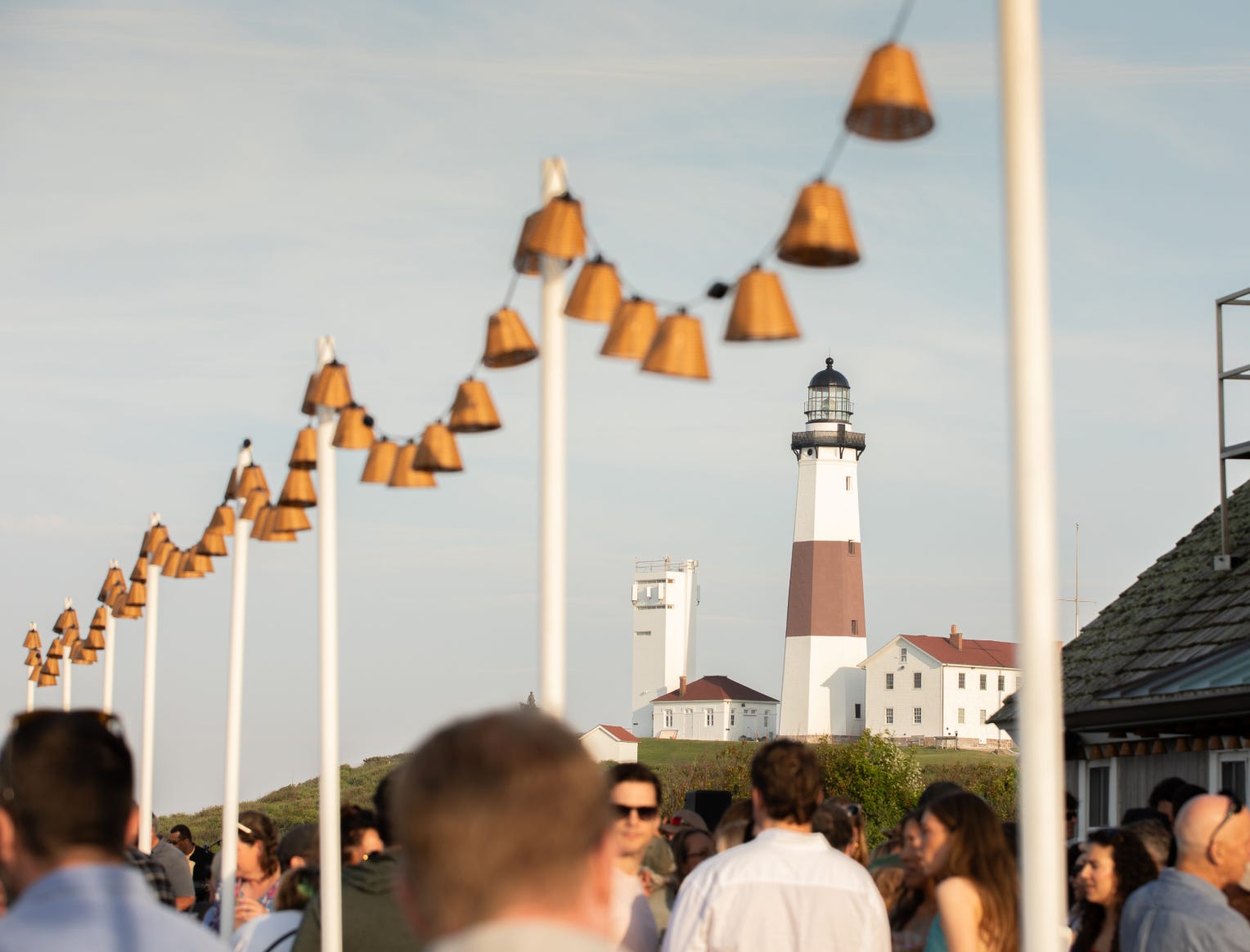
Or, head up to Montauk Point where, at the very tip of the peninsula, sits the Lighthouse Café, which opened this summer under Sean MacPherson and Celine Valensi of Crow’s Nest. He spent two years trying to secure the bid to lease this spot. The move is a Punt e Mes and tonic or a Matcharita (tequila, matcha, lime situation) on the patio, watching surfers and wildlife from what MacPherson called “unquestionably the most spectacular restaurant site on Long Island.”
If you head up to the lighthouse, hit The Ranch on your way back down. LA artist Matt Johnson’s “Meditating Figure” anchors the outdoor exhibition “LA Monumental” across 26 acres of former horse farm. Twelve decommissioned shipping containers — collectively traveled 12 million miles at sea — arranged into a 60-foot figure seated cross-legged in lotus position. The gallery calls it “a deity built by capital and consumption.” Warhol cultivated Montauk as an artist’s colony half a century ago. A giant meditation sculpture made of freight containers, with the Town Board currently in litigation over it, suggests the tradition is alive.
Further down, Duryea’s operates a long deck like a beach club in the South of France. The raw bar is strong. Reserve ahead if you can, but don’t stay for dinner. Oysters and sparkling rosé, then move on.
7:00 — Dinner at The Crow’s Nest
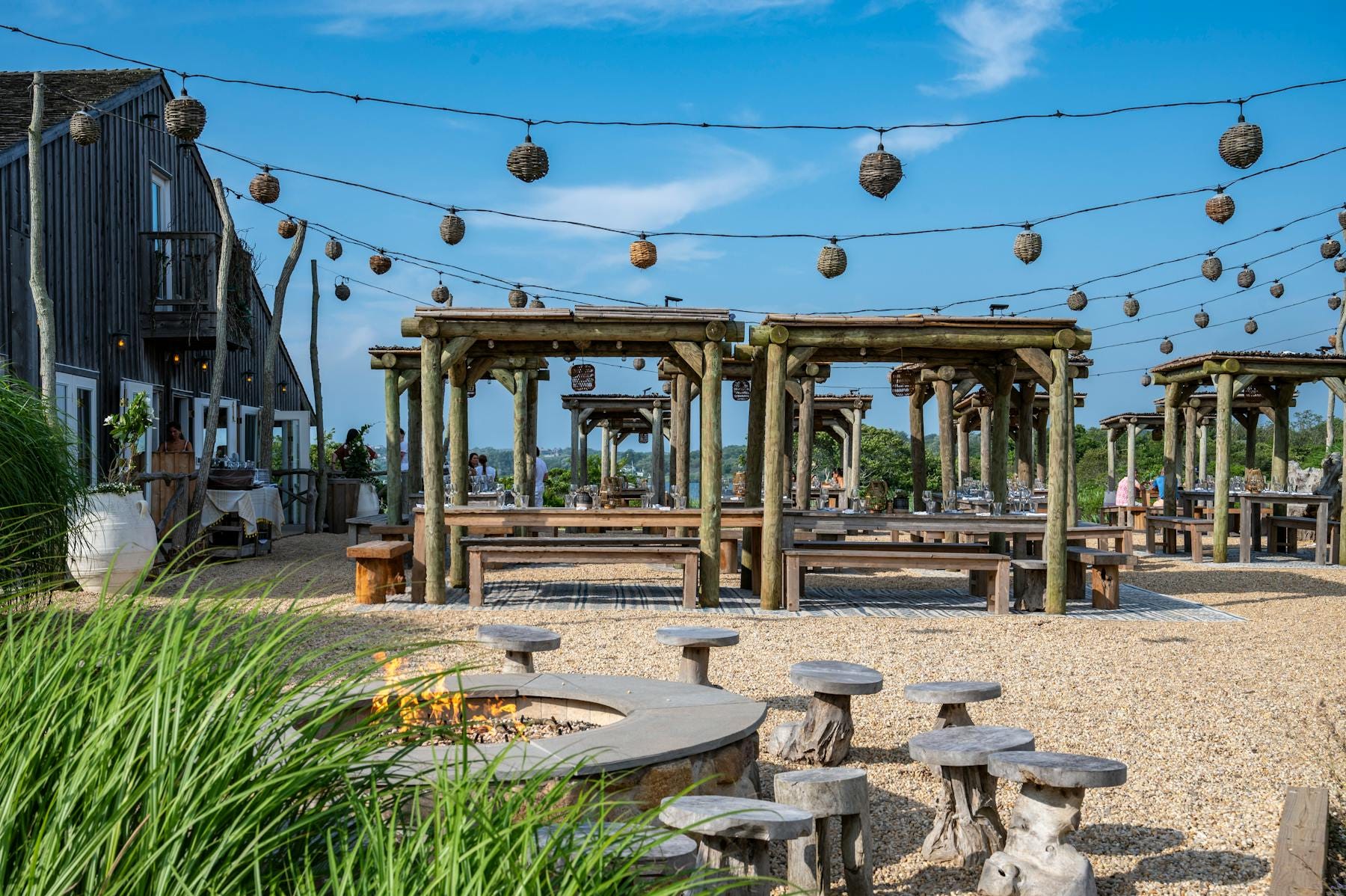
Yes, the waitlist is long and there is no other way to get a table. The satellite bar down at the beach of Lake Montauk will hold you while you wait, and the remaining sunset will do the rest.
The food is Mediterranean-inspired, generously portioned, and the wine list is as good as it gets in this town. It’s expensive, but the question isn’t whether you’ll spend money — it’s whether you’ll remember what you spent it on. We think you’ll remember this.
If you can’t face the wait, Bird on the Roof takes reservations and sits right in town. Or book The Harvest on Fort Pond, a local mainstay since 1994.
9:00 — Drinks at Bar Lalo
If you want a nightcap after dinner, head to Bar Lalo for a margarita. A CDMX-inspired bar from the team behind Alimentari Beach, on West Lake Drive. Sharp cocktail program, excellent tacos available until 1am. The music is often some interesting Latin boogie, and sometimes there’s a DJ.


Where to Stay
Daunt's Albatross for the classic family-run motel, right in town. Gurney's for the iconic resort. Hero Beach Club for something design-forward within walking distance of the town beach. Hither Hills Campgrounds if you can book a year in advance.


What Montauk Gets Right
Influencer culture has colonized nearly every surface of this town: the restaurants, the beaches, the sunset hour itself, which now acts as a content-production imperative. It’s easy to come out here and spend an entire weekend inside someone else’s shot list.
But the best things about Montauk have nothing to do with any of that. They have to do with the setting. A dive bar on a bluff. A picnic on a beach that has no wifi and no reason to check your phone. A drink at the edge of a peninsula where the only thing between you and the Atlantic is an iconic lighthouse commissioned by George Washington.
Montauk is still a fishing town. The surf culture is real, and so is the art legacy. The places that endure are the ones that understand the assignment: put people somewhere with an arresting view of the ocean or the bluffs, and the rest will sort itself out.